CategoriaPagina 2 di 5
LLM: i modelli linguistici, in produzione e a costo controllato
Un LLM è un componente di sistema con costi, latenza, limiti e comportamenti da capire. Sceglierlo, farlo girare e integrarlo bene richiede le stesse competenze ingegneristiche di qualsiasi altra infrastruttura, più un po' di sano scetticismo verso i claim e i benchmark. Questa categoria guarda ai modelli con l'occhio di chi li mette in produzione.
Molti articoli trattano il modello come componente ingegneristico. Come si valuta un LLM prima di adottarlo, come si leggono benchmark e paper senza farsi ingannare dai grafici, quando un modello linguistico è lo strumento giusto e quando va lasciato da parte. Un'integrazione solida parte dai limiti architetturali, dalle allucinazioni che il prompting non risolve al ragionamento che resta euristico.
Un altro filone riguarda il self-hosting e la sovranità del dato: quando conviene un modello open-weight on-premise rispetto a un'API cloud, la scelta del runtime (vLLM contro Ollama), il deployment su GPU, la quantization per far stare un modello nella VRAM che hai, e i temi che diventano decisivi per un'azienda europea, dalla retention imposta al kill-switch, dai costi di energia al ROI reale.
E poi l'italiano e i costi che nessuno ti dice: la tassa nascosta della tokenizzazione, che fa consumare a un prompt italiano molti più token del suo equivalente inglese, e come la si riduce. Il costo di un LLM è quello che paghi davvero sul tuo carico, che spesso supera il prezzo di listino.
Se stai valutando come integrare un LLM in azienda, vedi l'AI per le aziende o scrivimi.
Conviene chiedersi quale modello risolve il tuo problema al costo e al rischio che puoi permetterti. Quale sia il migliore in assoluto conta poco.

 Turning on reasoning in a local model is sold as a free upgrade in quality, and on a 16GB card it is neither free nor always an upgrade. On five models the median wait grew between 4.6 and 14 times, a request for one shell command went from three seconds to more than three minutes, and the coding ranking between a dense 27B and a 35B mixture of experts reversed completely. Given twenty minutes, the 27B with reasoning on reached what it solved in thirty seconds without it. Continua a leggere
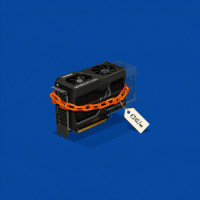 A 16GB card that serves a local model is not a GPU you also use for something else: a 27B or a 35B model takes fifteen of its sixteen gigabytes and keeps them while it waits for you. Waiting is cheap, 15 to 16 W at the card with the model resident, and forty-five hours of full benchmark load cost about three euros of electricity above what the machine draws anyway. The less obvious costs are model loading, swaps between models and a machine that is never really idle.
 Fra il 15 e il 28 agosto 2026, 1.045 sviluppatori Debian hanno votato su otto opzioni diverse, dal divieto totale scritto nel Social Contract alla messa al bando per ragioni climatiche. Ha vinto la via di mezzo: nessun divieto, nessun endorsement, responsabilità piena e personale di chi contribuisce. Vale la pena leggere cosa dice davvero la GR 2026-002, come si posiziona rispetto ai divieti di Gentoo e QEMU, e perché funziona anche come modello di policy per un'azienda.
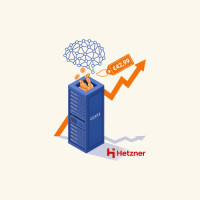 Il 15 giugno 2026 Hetzner ha applicato il secondo repricing dell'anno, e sulle linee che servono per l'inferenza i rincari non sono ritocchi: la CCX13 è passata da 15,99 a 42,99 euro al mese. Chi progetta oggi un LLM self-hosted per una PMI fa i conti su un listino diverso da quello di qualunque guida scritta prima dell'estate, con un dettaglio che sposta la strategia più di ogni benchmark, perché i server già attivi mantengono le condizioni originali.
 Most llama.cpp benchmarks published online measure something other than what their title says, without anyone lying. A repetition that reads the prompt cache reports a warm cache as a wait, a server that fitted itself reports a configuration nobody chose, four parallel slots change answers between identical runs, and a reasoning model cut at a small token budget looks fast because it never finished. Each mistake leaves a fingerprint, and each can be caught.
 Once loaded, a model held whole in VRAM barely touches the PCIe bus: 40 megabytes per second. Put some of a mixture of experts' weights in system RAM and the bus wakes up. On a 16GB RTX 5060 Ti plugged into a Ryzen 5 4500, the expert traffic of a 117B model reached 7.75 GB/s while generating and 7.95 GB/s while reading a long prompt, on a link rated at about 7.9. Whether the bus is the bottleneck is a separate question the data doesn't settle.
 Strata promises to run very large mixture-of-experts models on consumer hardware by keeping the hot experts in VRAM and streaming the rest from system RAM. On a 16GB RTX 5060 Ti with 32 GB of DDR4 the Coder build of Qwen3.8-Flash-Next does run, and on Python problems it matches a dense 27B that never leaves the card. Everywhere else the picture changes: it answers slower, thinks far longer, cannot answer in Italian, and takes the whole machine with it.
 A 16GB consumer card runs a 27B dense model or a 35B mixture of experts only when every server parameter is chosen on purpose. The defaults of llama.cpp are friendly to a first try and hostile to a stable setup: an automatic fit that rewrites what you did not pin, a context budget split across slots, a KV cache pair that silently leaves the fast kernel, and a reasoning mode under which a three-second answer takes three minutes.
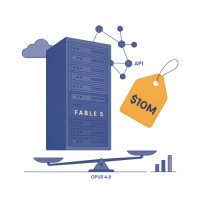 Fable 5 è il tier sopra Opus, ma più capace non significa sempre conveniente. Cosa cambia per chi sviluppa: il request surface rispetto a Opus 4.8, i parametri rimossi, il prezzo a 10 e 50 dollari per milione di token, e il break-even reale, ovvero quando il salto di capacità giustifica il costo per un caso d'uso concreto. Tabella decisionale tra i tier, scritta come guida che resta valida anche quando la finestra di novità decade.
 Ollama è il default per iniziare, ma non regge ogni carico. Confronto tecnico dei runtime di inference self-hosted: vLLM per throughput e batching su GPU, TGI e sglang per scenari specifici, llama.cpp server per hardware modesto. Quando ciascuno è la scelta giusta, in base a hardware disponibile, concorrenza richiesta e vincoli di latenza. Per chi porta l'inference on-prem dopo aver deciso di non dipendere da un'API di frontiera.