
Migrare le sorgenti APT al formato deb822 .sources
 Da quando hai aggiornato a Debian 13, ogni apt update ti saluta con lo stesso avviso sulle sorgenti da modernizzare. Non è rumore di fondo, è la migrazione ufficiale dal formato one-line di sources.list al formato deb822, quello che le installazioni nuove di trixie adottano già. Fra i due formati cambia più di quanto sembri, e il motivo serio per migrare non è l'avviso che ti annoia ma la direttiva Signed-By e ciò che ti permette di fare con le chiavi dei repository. Continua a leggere
Ultima modifica:
 Some recent GGUF files ship with a multi-token prediction head that llama.cpp can use as a built-in draft model. On Qwen3.8-27B it lifted decoding on code from 29.3 to 56.8 tokens per second, every single problem faster, for about 1.3 GB of extra VRAM. What the release notes do not say is that the answers change: at temperature zero only 7 of 50 were identical with and without the head, while the number of correct answers stayed the same. Speculation here is fast, not neutral.
 Un major upgrade eseguito via SSH ha una proprietà che nessun altro intervento sistemistico condivide: lo strumento con cui lavori è anche la prima cosa che rischi di rompere. La connessione che cade a metà di un dpkg, il prompt su sshd_config accettato di fretta, il firewall che riparte male, ognuno di questi errori ha già chiuso qualcuno fuori dalla propria macchina. La sequenza che uso per portare un VPS da bookworm a trixie li mette in conto tutti e tre.
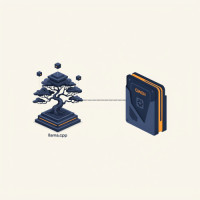 Ternary-Bonsai-2-27B is Qwen3.8-27B with its weights reduced to three values, packed at 1.75 or 2.13 bits per weight, and it needs a fork of llama.cpp to run. On a 16GB card the result is striking on size and speed: a 27B model in six to seven gigabytes that decodes almost twice as fast as the 4-bit build. On 134 deterministic items it passed 105 and 107 against 113 for the conventional quants, a gap that this comparison cannot test, for a reason worth understanding.
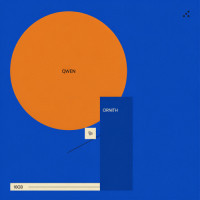 The 35B-A3B shape, 35 billion parameters with about three billion active per token, is the sweet spot of a 16GB card, and two models compete for it. At the same IQ3_XXS quantization, Qwen3.6-35B-A3B and Ornith-1.5-35B-A3B tie overall on 134 deterministic items, but not in every category: Qwen follows precise instructions in eight cases where Ornith fails, and Ornith is better at arithmetic. Ornith decodes 19% faster, and Qwen loses more ground in Italian.
 A new version of a model you already run is the most common upgrade decision, and the least measured. Ornith-1.5-9B replaced Ornith-1.0-9B, and on a 16GB card the two tie exactly on fourteen families of agentic coding tasks. On a deterministic bank of 134 items the older model is ahead overall, by a margin the paired test cannot confirm, and clearly ahead on following precise instructions: nine items to none. It also reads prompts faster and answers in half the tokens.
 Three times the parameters and almost the whole card: on a 16GB card the dense Qwen3.8-27B and the best 9B coding models are a real trade-off, not an obvious upgrade. Without reasoning the 27B solves 34 Python problems out of 50 against 8 for each 9B, a gap no test can doubt. With reasoning on and five minutes per problem the advantage disappears, because the 27B does not finish. On agentic bug fixes it shipped no wrong fix at all, where the 9B models shipped seven and eight.
 Two 9B models at 8-bit, same speed on the same card, and two very different personalities. Without reasoning they tie exactly, 8 Python problems out of 50 each. With reasoning NeoHorse pulls ahead to 18 against 10, but it also went along with a false premise six times out of fourteen, where Ornith never did. On real bug fixes both shipped more illusory fixes than correct ones. Pick by what scares you more: a slow answer or a confident wrong one.
 The Ornith 1.5 family offers a dense 9B and a 35B mixture of experts with about three billion active parameters, and on a 16GB card the MoE is both bigger and faster. With reasoning on it solved 26 Python problems out of 50 within five minutes against 10 for the 9B, a difference confirmed by a paired test, and it answered sooner on every probe. The 9B keeps two real advantages: half the VRAM and a context about twice as long as the MoE can load.
 The GSQ-RCO build of Qwen3.8-27B is a smaller file than the uniform IQ4_XS and comes with a speculative decoding head, so on a 16GB card it is twice as fast and holds twice the context. The question everyone asks next is whether the cheaper quantization costs intelligence. On fifty coding problems it solved 34 against 33, and this measurement cannot tell them apart: the design can only see differences larger than twenty points, and a non-difference is not an equivalence.